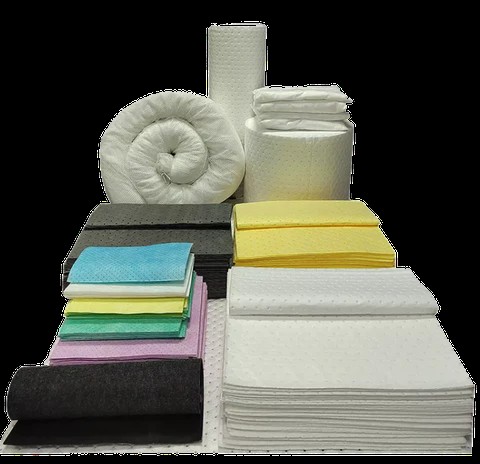
Industrial absorbent solutions play a crucial role in managing oil spills, wastewater contamination, and industrial waste separation. Industries such as petrochemicals, manufacturing, and wastewater treatment generate complex oil-water mixtures that require efficient separation technologies.
Recent research breakthroughs reveal innovative materials capable of absorbing oil, separating emulsions, and being reused multiple times. These innovations highlight a shift toward sustainable, high-efficiency absorbent technologies.
This blog explores the latest innovations shaping the industrial absorbent market, focusing exclusively on verified scientific developments.
Why Industrial Absorbent Solutions Matter for Environmental Safety
Industrial processes frequently generate oily wastewater that must be treated before disposal or reuse. Industries such as petrochemicals, metallurgy, food production, and pharmaceuticals produce large volumes of emulsified wastewater, which is particularly difficult to treat due to surfactants that stabilize oil droplets. Advanced absorbent materials help address this challenge by separating oil from water quickly and efficiently.
Key Applications of Industrial Absorbent Materials
- Oil spill cleanup in marine environments
- Wastewater treatment in manufacturing plants
- Industrial leak and spill containment
- Environmental remediation of polluted water bodies
Breakthrough Bio-Based Absorbents Driving Innovation
Moss-Derived Oil Absorbent Technology
Scientists recently developed a bio-based oil absorbent derived from sphagnum moss that selectively absorbs oil from water. The natural moss was chemically treated to enhance porosity and oil affinity, creating a highly effective oil-absorbing material. The treatment process involved hydrogen peroxide and sodium hydroxide modification followed by a silane coating, which introduced oil-attracting properties while repelling water.
Performance Highlights
| Feature | Result |
| Adsorption capacity | 22.756 g oil per g absorbent |
| Reusability | Maintains over 90% efficiency after 10 cycles |
| Surface property | Hydrophobic conta ct angle of 157° |
The adsorption capacity of 22.756 g/g exceeds many existing bio-based absorbents that typically range from 1.69–18.2 g/g
Reusable Aerogel Sponge Technology for Oil Spill Cleanup
Another breakthrough innovation is a cellulose-based aerogel sponge designed to capture and release oil through light-controlled switching.
The aerogel integrates biodegradable cellulose with a light-sensitive compound called spiropyran, allowing it to alternate between oil-absorbing and oil-repelling states.
How the Technology Works
- Under visible light, the material absorbs oil from water.
- Exposure to ultraviolet light triggers oil release.
- The sponge can then be reused for additional absorption cycles.
Researchers confirmed that the material performs effectively even in cold environments, making it suitable for harsh marine conditions.
Advanced Oil-Water Separation Systems for Industrial Wastewater
Beyond absorbent materials, scientists are developing membrane-based systems that improve industrial wastewater treatment. A system known as the Janus Channel of Membranes (JCM) separates oil and water simultaneously using hydrophilic and hydrophobic membranes placed within a channel. Traditional technologies typically recover either oil or water but not both simultaneously. The JCM design enables dual recovery, improving efficiency for industrial wastewater treatment.
Next Move Strategy Consulting’s View on the Industrial Absorbent Market
From a strategic consulting perspective, the Industrial Absorbent Market is shifting toward sustainability, circular resource recovery, and reusable materials.
Strategic Opportunities
- Bio-based materials adoption: Companies can integrate natural absorbents such as modified moss into spill management solutions.
- Reusable absorbent technology investment: Aerogel-based and light-responsive materials can reduce long-term operational costs.
- Integrated wastewater treatment systems: Combining absorbents with membrane separation technologies can improve recovery efficiency.
- Environmental compliance and ESG alignment: Industries adopting sustainable absorbent solutions can strengthen environmental performance metrics.
Next Steps: Actionable Takeaways
Organizations exploring advanced absorbent technologies can take the following actions:
- Evaluate bio-based absorbent materials for spill response systems.
- Pilot reusable absorbent technologies in industrial wastewater treatment facilities.
- Invest in membrane-assisted separation systems for improved oil and water recovery.
- Strengthen environmental compliance strategies through sustainable cleanup technologies.
- Collaborate with research institutions developing next-generation absorbent materials.
Conclusion
Industrial absorbent technologies are undergoing rapid innovation driven by sustainability and environmental protection needs. Breakthrough materials such as moss-derived absorbents and light-responsive aerogel sponges demonstrate that eco-friendly solutions can also deliver high performance.
Meanwhile, advanced membrane separation systems are improving oil and water recovery efficiency for industrial wastewater treatment.
Together, these developments signal a new era of high-efficiency, reusable, and sustainable absorbent solutions that will shape the future of industrial environmental management.
About the Author
Sugata Kar is a content writer specializing in transformation-focused, insight-driven narratives. She creates research-backed content aligned with evolving business priorities, digital trends, and audience needs. Her work helps organizations communicate clear value propositions, strengthen visibility, and convey strategic intent effectively. With a data-informed storytelling approach, she prioritizes clarity, relevance, consistency, and measurable digital impact across platforms.